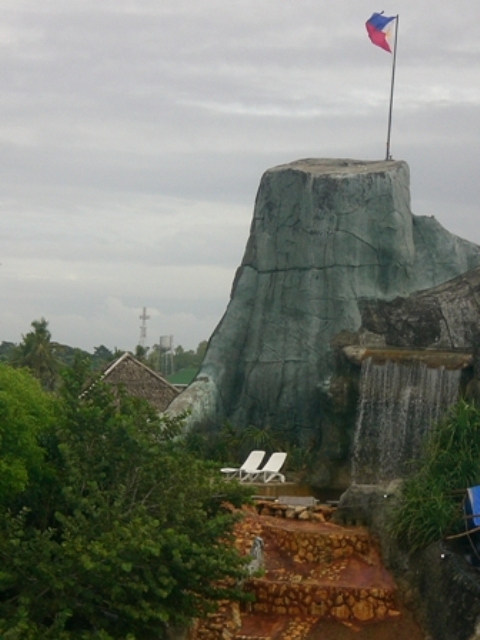
I’m not on writing-mode right now. But I took these photos,
it’s probably a good idea to photograph
things you can’t translate. Alupihang dagat.
A hundred bucks and Christmas presents to anyone who can translate; (i had to research it).
Lawyer. vegetarian. ashtangi. Subscribe (it's free!) or click "Skip to Content" below

I’m not on writing-mode right now. But I took these photos,
it’s probably a good idea to photograph
things you can’t translate. Alupihang dagat.
A hundred bucks and Christmas presents to anyone who can translate; (i had to research it).
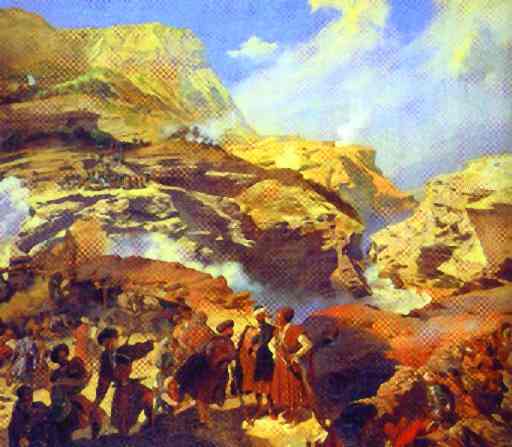
Grigory Gagarin. Battle of Akhatle between Russians and Circassians on May 8, 1841. 1841-1842. Oil on canvas. The Russian Museum, St. Petersburg, Russia. Right-clicked from http://www.abcgallery.com
While the modus operandi, the signature of the bomb, and manner of delivery, showed that the Batasan bomb blast was likely perpetrated, (when i use “likely” i mean statistical probability), by an armed group with military training that disregards civilian casualties and (see blog post of November 14) and knows the rudiments of propaganda, or by an armed group copycatting the modus operandi of another armed group; and that , it was aimed at the institution itself, the police authorities took the less likely theory, statistically speaking, of political assassination of Wahab Akbar being the objective of the bombing . We take their word for it because they have access to the evidence. If that theory is based on the evidence at hand, it should prevail over statistics and studies.
But that evidence was largely testimonial, likely inadequately counselled or made involuntarily, and now, recanted. In the meantime, the names of politician-suspects have been trotted in the media based on largely inadmissible evidence (see my blog post of November 20).
Now, those pieces of evidence are gone (except for the “testimony” of the former driver of one rival-politician) because of the recantation of the Malate raid witness (a former Basilan town mayor) and the Payatas raid witnesses. Where does that leave the police authorities and the CIDG?
They have the forensic evidence of Wahab Akbar and four others succumbing with the former being the most “colorful”; that’s one; of Wahab Akbar and four others sustaining the most number of wounds with the former being the most “colorful”; and the “trajectory” of the bomb shrapnel based on where it was attached, that’s two
“Colorfulness” is not evidence; as basis for a theory of the case it is also founded on statistical probability. So the police is left with “trajectory” of the bomb shrapnel. And for that, we try to take their word for it. That bomb blasts can be made to have a trajectory dedicated to one person.
The police advanced the theory that it was perpetrated by the Abu Sayyaf moonlighting as political assassins (it was their sideline, according to the police), and in this instance, moonlighting for a mastermind who was/ is a rival-politician of Akbar. That fits the armed-group-with –military-training theory, as well as the political assassination theory; the difference is the objective.
The House as target causes much discomfort: it means one of the armed groups have brought the war to the city; or a copycat has the capability to make it appear that way for the purpose of retaliation or internal propaganda.
The political assassination theory makes us sleep soundly at night: it means only the “colorful” are targets and unsafe.
We try to take the word of the police for it because we want to be able to sleep soundly at night.
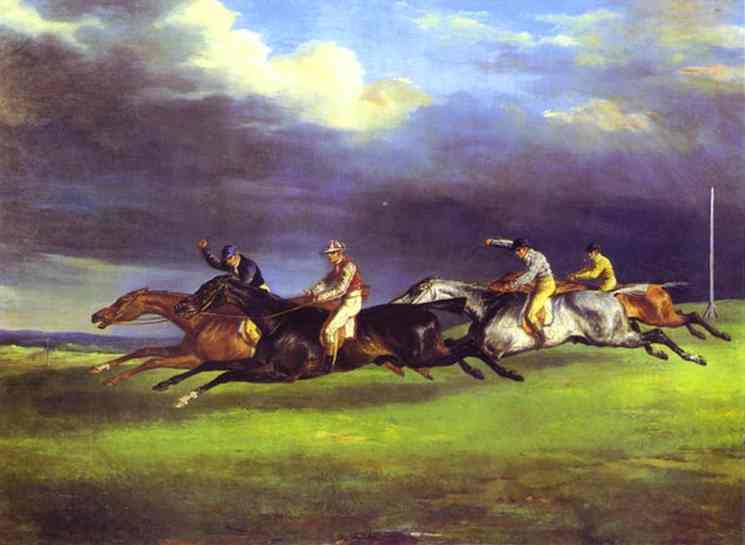
Jean Louis André Théodore Géricault. The Derby at Epson. 1821. Oil on canvas. 92 x 123 cm. Louvre, Paris, France.Right-clicked from www.abcgallery.com
All four posted by Student # 2. Unedited by blog admin
1st post by Student 2
quote “On December 3, in a morning radio program broacast over DZBB, Mike Enriquez was having a live interview about the Manila Peninsula incident with GMA reporter Lazatin, one of the media persons present in the said event. Enriquez, however, instead of asking questions about the uprising at the Manila Pen, asked leading questions meaning to put reporters from another station in a bad light. To these questions, Lazatin tried his best to give answers without feeding Enriquez’s tirade against reporters from another station who were detained. Despite his efforts however, Enriquez still pressed on with more questions unrelated to the Manila Pen incident and pressed on with how the detained reporters have been irresponsible in their actions — even having the gall to say on air that the incident should enlighten the public regarding which stations can honestly be tagged as “walang kinikilingan.”
quote “All this is in violation of The KBP Radio Code as stated in the section devoted to Commentaries and Analyses (number 4, letters f and g), which states that “Personal attacks against fellow broadcasters and other stations are considered unethical and not be allowed. Management shall be primarily and directly responsible for utterances of their broadcasters in this regard,” and “Programs and commentaries which deal with sensitive, controversial issues must be fair, factual, and impartial.” It is clear that, in this case, Enriquez maligned fellow media practitioners from a competing station, and that he was not in any way fair and impartial.” closed-quote.
XXXXX
2nd post by Student 2
quote “In a story by Michelle V. Remo entitled “DOF opposing proposed tax perks for senior citizens” printed last November 22 on page B5 of the Philippine Daily Inquirer, the writer only used statements from the Department of Finance and failed to get the side of the legislator behind Senate Bill No. 269 which seeks to amend the Senior Citizen Act, and of the other parties concerned in the said bill.
quote “This is in violation of Part III, Number 1 and 2 of the Code of Professional and Ethical Conduct of the Philippine Press Institute which states that “All efforts must be exerted to make stories fair, accurate and balanced. Getting the the other side is a must, especially for the most sensitive and critical stories. The other side must run on the first take of the story and not any day later,” and that “Single-source stories must be avoided as a rule. There is always the imperative to get a second, third or more source, the contending parties to an issue, the expert source, the affected party, the prominent and the obscure, in the story. We musy strive at all times to ascertain the truth of our sources’ assertions.” ” closed-quote.
XXXXX
3rd Post by Student 2
quote “In the November 25 episode of Rated K, a feature on the Ferrari cars served as a discreet (or rather indiscreet) promotional for the Shell-Ferrari promo, which involves selling Ferrari model cars. The commercial break immediately following the said segment even involved two runs of the TV advertisement for the said promo. This is in violation of The KBP Television Code as stated in the section devoted to Placement of Advertising, which states that “Broadcast stations shall exercise particular discrimination in the acceptance, placement, and presentation of advertising in news programs so that such advertising in news programs is clearly distinguished from the news content. Further, commercials in the guise of of news shall not be acceptable.” ” closed-quote.
4th post by Student 2
quote “In the November 28 newscast of 24 Oras, there was a news segment that discussed the situation of teachers in a school in Basilan. A number of teachers from Sinangkapan Elementary School have stopped teaching due to a delay in their salaries, some of them even have not received salaries for more than 4 months. The news segment was balanced and fair, with both the school administration and the faculty having the chance to air their side — for the school administration, they were given the chance to explain the reason for the delay, and for the teachers, they were able to voice out their complaint.What made the news segment good, however, is that it was in a setting far from the national capital. Networks have the tendency to prioritize reports based here in Metro Manila, therefore leaving pertinent issues in the provinces to the broadsheets and local provincial stations.Dec 4, 10:53 PM ” closed-quote.