

Answer: My new name would be: Yours Truly.
From the West Philippine Sea.
Safety in the Media Coverage of the Gray Zone Areas of the West Philippine Sea:
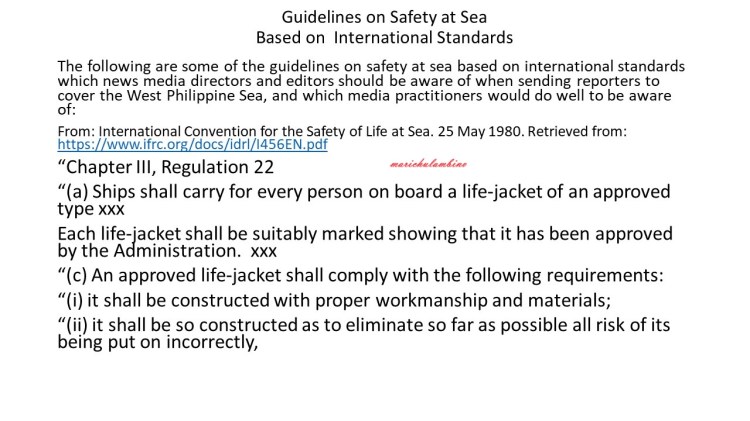
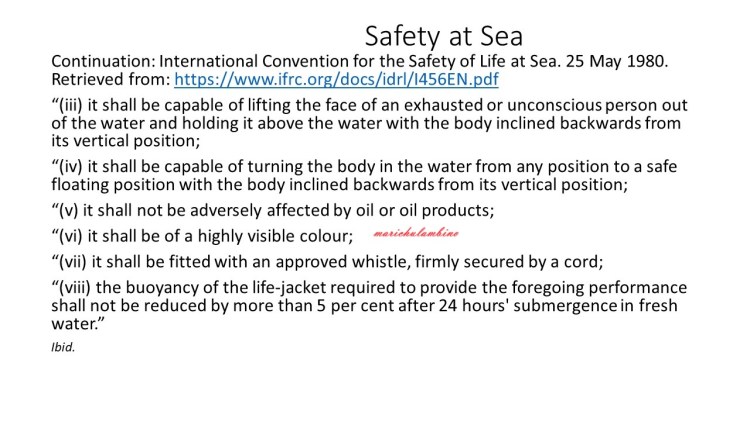
Snippets: Images of Part IV of the Live Presentation, Slides 33-35
An RLC credits-grant from the UP Department of Journalism, the U.P. College of Mass Communication administration led by the UPCMC Dean, the UP Diliman Office of the Vice Chancellor for Research and Development, the UP Diliman administration led by the Office of the Chancellor
Image Credits: As stated in the text or as embedded in the images, all used here non-commercially for academic purposes
Hosted by: UPCMC Office of Research and Publication
The “Gray Zone” Areas of the West Philippine Sea as Journalism Beat: Proposals for an Informed, Continuing, and Safe Coverage by Marichu C. Lambino (author)
PART IV only
of the Live Presentation,
Slides 33-35
Conclusion (see Abstract posted earlier, previous post)
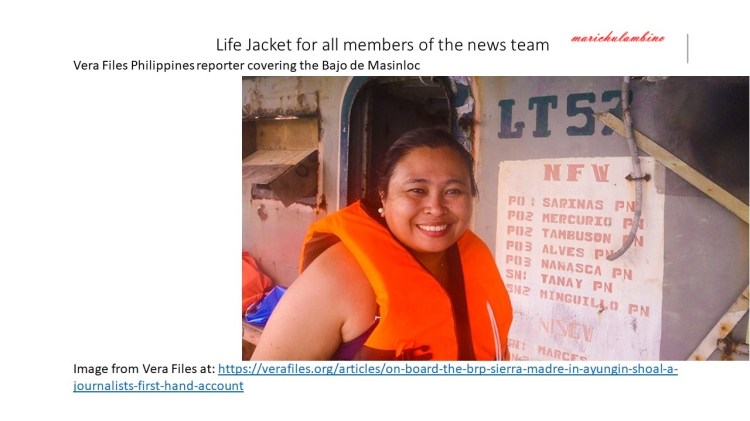
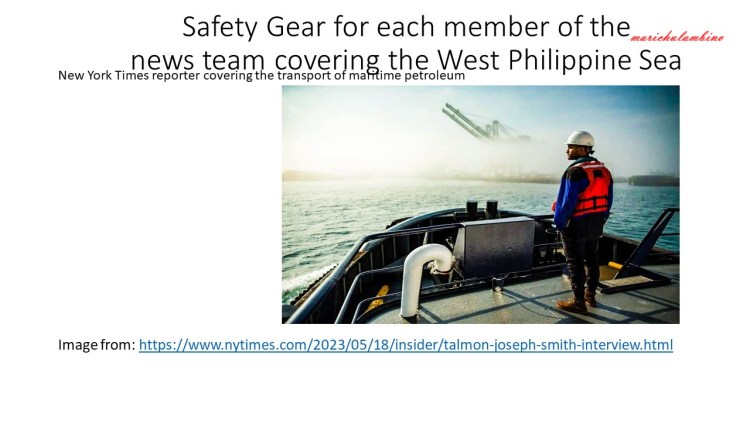
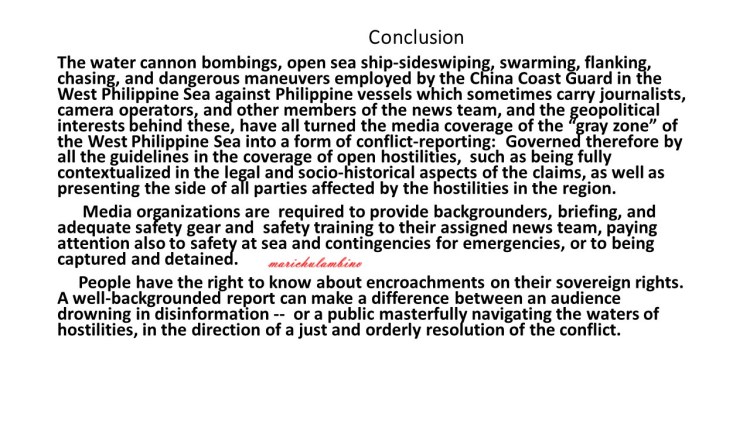
Conclusion: The water cannon bombings, open sea ship-sideswiping, swarming, flanking, chasing, and dangerous maneuvers employed by the China Coast Guard in the West Philippine Sea against Philippine vessels which sometimes carry journalists, camera operators, and other members of the news team, and the geopolitical interests behind these, have all turned the media coverage of the “gray zone” of the West Philippine Sea into a form of conflict-reporting: Governed therefore by all the guidelines in the coverage of open hostilities, such as being fully contextualized in the legal and socio-historical aspects of the claims, as well as presenting the side of all parties affected by the hostilities in the region. ……………………………………………………………………. Media organizations are required to provide to their assigned news team: backgrounders, briefing, and adequate safety gear and safety training, paying attention also to safety at sea and contingencies for emergencies, or to being captured and detained. ……………………. The people (the audience) have the right to know about encroachments on their sovereign rights. A well-backgrounded report can make a difference between an audience drowning in disinformation — or a public masterfully navigating the waters of hostilities, in the direction of a just and orderly resolution of the conflict.