Bedol the Untouchable

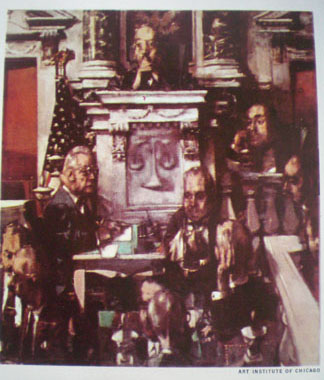
trial.jpg“The Trial” by Jack Levine, photo of a print published by the Art Institute of Chicago


Lintang Bedol was admitted to bail a few hours ago, that meant in a few hours he’d walk and may never see the inside of a jail cell in the lifetime of this administration. The charges were not only lenient as most commentators called it, they were also specifically designed such that he could easily bail himself out in a matter of hours. If you look at the overt acts alleged, charged, and proved in his rap sheet, he should have been charged and found guilty for at least four counts and not just one count of indirect contempt; there were four separate acts. Why does this matter? If four counts, the penalty would have been two years, it takes it out of the penalty for arresto mayor and puts it inside the penalty for prision correccional; if the term is prision correccional, after conviction (if the accused had been convicted and on appeal), bail is discretionary and not a matter of right; it can be denied. (of course his lawyer can argue that the six-month penalty for the four should not be put together, but it is arguable). What I’m saying is: The Comelec did not make any effort!


The Comelec’s own rules of procedure (and the Rules of Court) punish any of the following acts as indirect contempt:


“Comelec Rules of Procedure . Rule 29, Section 2

“(a) Misbehavior of the responsible officer of the Commission in the performance of his official duties or in his official transactions;

“(b) Disobedience of or resistance to a lawful writ, process, order, judgment or command of the Commission or any of its Divisions, or injunction or restraining order granted by it;

“(c) Any abuse of or any unlawful interference with the process or proceedings of the Commission or any of its Divisions not constituting direct contempt under Section 1 of this Rules;

“(d) Any improper conduct tending, directly or indirectly, to impede, obstruct, or degrade the administration of justice by the Commission or any of its Divisions;

“(e) Assuming to be an attorney and acting as such without authority; and

“(f) Failure to obey a subpoena duly served..


Bedol was charged with and found guilty of the following overt acts:

1) repeatedly disobeying summonses of the Comelec

2) failing to attend to the counting of the votes in Maguindanao

3) failure to deliver the municipal COC’s to the Comelec office in Manila. (and losing them! and not knowing how he lost them! and if indeed he lost them failing to report it! and if indeed he lost them, failing to investigate how they were lost!). this alone is four counts

4) publicly taunting the Comelec to sue him

5) brandishing a pistol on tv

6) publicly bragging he had an armory


In other words, the Comelec legal department and the Comelec en banc even if it only had the rule on indirect contempt in its legal arsenal could have easily kept Bedol in jail and with bail dsicretionary if convicted. It can if it wanted to, even with just the rule on indirect contempt.


Four counts would make the penalty two years (he could on plea bargaining negotiate to serve terms concurrently), but the penalty takes it out of arresto mayor and brings it into the prison term for prision correccional, the bail for which after conviction (after trial and conviction in the lower court, here, in the Comelec) discretionary and not a matter of right (because it is after conviction.)


Rules of Court, Rule 114, bail, proceeding by analogy, if the offense is cognizable by the MTC (arresto mayor, six months or less), bail after being convicted is still a matter of right, as follows:


“SEC.4 Bail, a Matter of Right. – All persons in custody shall: (a) before or after conviction by the Metropolitan Trial Court, Municipal Trial Court, Municipal Trial Court in Cities and Municipal Circuit Trial Court xxx

“SEC.5 Bail, When Discretionary. – Upon conviction by the Regional Trial Court of an offense not punishable by death, reclusion perpetua or life imprisonment, the court, on application, may admit the accused to bail.

“The Court, in its discretion, may allow the accused to continue on provisional liberty under the same bail bond during the period of appeal subject to the consent of the bondsman. XXX”


It is discretionary after the accused had been convicted if the penalty imposed is within prision correctional (of course, his lawyer can argue: don’t combine the four 6-month penalties. But the prosecution never made an effort!).


Even outside of the election sabotage case, they could keep him in jail if they wanted to; an efficient and professional prosecutor or legal department could. To this day, the nation does not know what happened to the missing COC’s. (And technically, you could detain a person until he answers the question of the court).
Burgos Writ vs. Macapagal-Arroyo et al

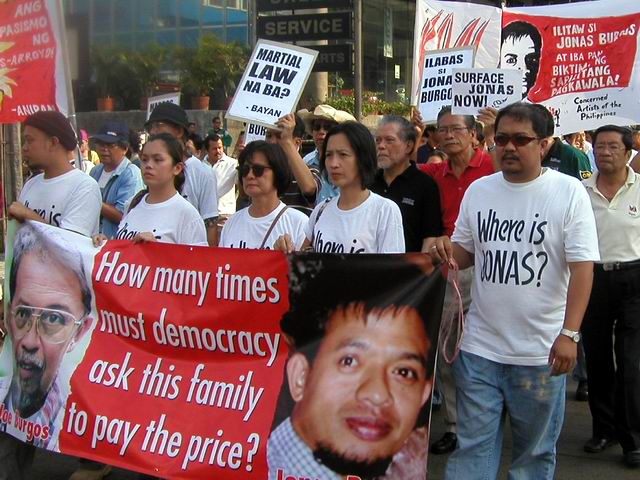
Writ of habeas corpus for Jonas Burgos granted to Edita Burgos vs. Gloria Macapagal-Arroyo, General Esperon, et al jj.jpg

Photo right-clicked from arkibongbayan.org

It’s 8:30 am, one-and-a-half hours before the hearing on the writ of habeas corpus granted to the Burgoses for respondents Macapagal-Arroyo, et al to produce the body/ person of Jonas Burgos in court or to explain why he is being detained. This is not a hearing on the petition; the petition has been granted by the Supreme Court and the writ against Macapagal-Arroyo et al (notwithstanding presidential immunity) had been granted. It means the Supreme Court saw that the facts alleged in the petition, and those that it could judicially take notice of, were sufficient for the issuance of the writ against the Commander-in-Chief, the AFP chief of staff, et al. to produce the person of Jonas Burgos. Respondents have to explain themselves.

I guess it’s alright to blog this now, I waited; it doesn’t give the military agents and their lawyers any lead time, General Bacarro and their other representatives are most likely already in transit to the Court of Appeals. They are expected to deny custody of Jonas Burgos.

Don’t let them get away with it. Subpoena, or move for the issuance of a subpoena ad testificandum and duces tecum for Army chief Lt. Gen. Romeo Tolentino and his intel report; he said that they did a background check on agriculturist Jonas Burgos and claimed he was a member of the New People’s Army “Front Committee 2 based in Bulacan”, and that he has the intel report to show for it (subpoena duces tecum for the intel report).

Parties to an action are entitled to the issuance of processes that would produce the evidence for their case; and if the Court of Appeals denies the Motion for issuance of subpoenas, then the Supreme Court should be able to order the Court of Appeals. This is an evidentiary hearing, or would today turn into an evidentiary hearing, because the Supreme Court had anticipated that the respondents would deny custody; and that was why they had ordered the parties to bring the person of Jonas Burgos to the Court of Appeals.

If those subpoenaed allege that matters of “national security” prevent them from testifying and from producing the documents, they can be given an executive session with the justices and the parties and no one else attending, and the records could be asked to be sealed if the Court thinks that these involve the sensitive matters (like names of agents, etc.). But if they refuse altogether to testify and to bring those reports, the petitioners could move to cite them in contempt. And if in contempt, have them detained. Until they comply with the order to testify and produce the report. I know; if you push this to the legal limits, if the Court of Appeals and the Supreme Court use the extent of all the authority that they have, we might have an Armed Forces refusing to obey the writs of the Court. At some point, if the Supreme Court pushed this to the extent of all its authority, you’d have a stand-off. I know. But what else are we to do? Where else would the Burgoses run to?

Jonas’s family have the right to know whether their son had been cased or put under surveillance before he was kidnapped. Where did the Army chief get his information that he was an NPA member? From their assets? When did they get this information? How? If true, what are the names of the people he was moving around with? What were his activities?

Jonas Burgos has been documented to be frequently giving seminars and trainings on organic farming to farmers in Bulacan. In order to do that, doesn’t he need to be engaged in vegetable-growing himself? So he’d know how it’s done? To plant and tend to your vegetable plots, don’t you need to stay put in one place at a time? To water the vegetables, put nets around them so you won’t have to spray them with pesticides, cultivate your compost fertilizer and spread those on the vegetables and make sure that the insects don’t eat up all the leaves? Does he tend to his vegetable plots in the daytime and then attend to his rebellious plots at night? When he’s in the hills of Bulacan at night committing rebellion, at 5:00 am, does he put down his firearm then trek down to the flatland to check on his vegetable patch in the daytime?

When we’re buying and ordering and munching our fresh, dewy iceberg lettuce and romaine tossed in sun-dried tomato vinaigrette, all organic, are we consuming produce made by the NPA? Are we then deemed accomplices in the crime of “terrorism” because we are buying and eating their produce, organic vegetables?

The Court has the authority to issue court processes that would lead to Jonas Burgos, and Army Chief Lt. Gen. Tolentino should sit on the witness stand.

And the other respondents — the next days: the Supreme Court writ is addressed to: Gloria Macapagal-Arroyo and Hermogenes Esperon, et al.