Artwork by Henri Matisse, published by www.greatmodernpictures.com, selected for this post by the blog administrator
On Crawls, Posted by student # 9 , J192, (unedited by blog administrator)
quote “My partner and I reported (sic) the KBP Code of Ethics for Television, and with regard to the use of text crawls the code says that it would be for news updates (breaking news)and national emergencies.
Quote “The two major TV stations (GMA, however is not a member of the KBP) use text crawls to: 1. advertise/promote their shows, 2. tell audience the what the next program will be. These crawls are usually shown during the primetime slots.
Quote “During the past week I have been sleeping late and I saw the crawls even after the late night news has finished. They (sic) not just these little chracters (sic) flashing on the bottom of your screen, they have pictures of the actors starring in these programs.
Quote “It is quite irritating. By the way, as a form of advertising the networks also flash some products for promotion of their sponsors. It is funny to see a laundry detergent on the bottom of your screen while watching the serious faces of news anchors. Jul 25, 11:02 AM” closed-quote.
XXX
Posted by Jericah Regado Fifth Blog Entryby Jericah Regado – Comm 191/WWX Unedited by Blog Administrator
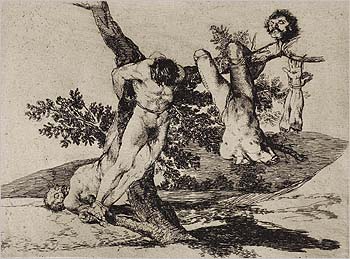 “The Disasters of War” by Francisco Goya, re-published in www.smh.com.au (Sydney Morning Herald) chosen for this post by the blog administrator
quote “Last night, I watched TV Patrol and noticed two ethical practices.
The first one followed the KBP Television Code provision on news reporting which says that “Good taste shall prevail in the selection and handling of news. Morbid, sensational, or alarming details not essential to factual reporting shall not be allowed.” The news story was about the result of the autopsy conducted in the corpses of the Marines killed in Basilan. The medico-legal officer said that the soldiers were tortured first before they were killed. In relation to this, the medico-legal officer showed some photos of the corpses to the reporter. There was a part where some photos were not blurred, but they were shown only for about two seconds so it was still tolerable for me. But the second time the photos were shown, which was longer compared to the first one, they were already blurred. It is proper to do this because these photos show morbid details of the corpses. On the other hand, I did not find airing the medico-legal officer’s descriptions about the corpses (such as the possible ways the suspects killed the soldiers) unethical because those were essential to the news.
Quote “On the other hand, another news item was about the panic in a school caused by the death of an alleged meningococcemia-inflicted child (who was studying in that school) in Quezon City. The reporter interviewed the seatmate of the alleged victim of meningococcemia, and the face of the child was blurred.
 painting by Juan Luna published by www.lopezmuseum.org.ph chosen for this post by the blog administrator
There was also a footage which showed the class, and the children’s faces were also blurred. This practice is ethical because it protects the children from the possible reactions of the people who can indentify (sic) them if their faces weren’t blurred.
Quote “I hope that media practitioners continue to comply to ethical standards so that the Filipino audience can have better mass media.
Jul 31, 8:41 AM —“ closed-quote.
XXX
Posted by Student #8 , J 192, (Unedited by blog administrator)
quote “While on a bus going to school, the TV was tuned in to “Umagang Kay Ganda” of ch.2. That was last July 24 after the SONA the day before. Most of the news were about the SONA and one portion talked about the reactions of people.
Quote “There was a man interviewed about how he thought of PGMA’s SONA. That portion violated the KBP Codes for TV for the interview do (sic) not have a caption(name and designation).
Quote “Under the KBP Codes (sic) for TV, when it comes to sources,”Voice and video clips of persons involved in the news shall be properly identified.”
He was expressing his opinions but we are sic) not sure who he really is.(sic) He is (sic) not a prominent person or the ones you usually see on TV. There was a voice-over saying that they got the reactions of people, including economists about the said SONA.
Quote “However, I still believe that proper attribution is a must even for a short interview like that. I would have the impression that the man interviewed is an economist, but how would I know?
Quote “He might not even be an authority on matters like the one’s (sic) discussed in the SONA and yet he was sharing his views and people might actually believe him not knowing who or what he really is (sic).Aug 1, 12:16 AM” closed-quote.