
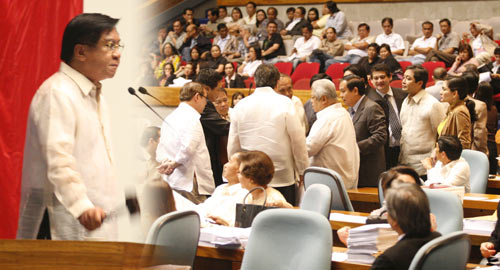
In a vote of 19 to 6, the resolution to convene a constituent assembly (con-ass) to change or amend the constitution has been sent to plenary for deliberation and vote yesterday, with “assurance” from the committee chair it would most likely not be voted or not approved; they just wanted to find out “daw” how many were in favour of con-ass. And that, besides, Congress is set to adjourn on June 3.
A vote of 19 to 6 however looks like a party vote to me.
A validly constituted con-ass (constituent assembly to amend/ revise the Constitution) has a life of its own. All it needs is a resolution, a valid one, to “convene” it. That resolution can be approved in one day if there are enough resources to push it. When it is said here, it has a life of its own, it means: once validly convened, it follows its own calendar and the content of its draft proposed constitution is not subject to judicial review.
Now, i’ve put that in quotes, because what the House is doing is a Senate-less (without the Senate), half-a-congress, half-a-constituent assembly or half-a-con-ass; and there’s no such thing as half-validly constituted, or half-constitutional. (Semi-legal? para-valid? Quasi-legitimate?)
Unless set aside by the Supreme Court however. It will and can go on unless the Supreme Court issues an injunction and strikes down, in an appropriate case, the resolution calling and convening the con-ass, or half-con-ass.
But if there is no appropriate case, if there is no injunction, if there is no massive objection from the people against it, a validly constituted con-ass is not limited by any time frame, it is supreme in its sphere, it can take one day (a record) or six months; it is independent of the June 3 adjournment of Congress or the July 27 State of the Nation address or the November deadline of filing of candidacies for the 2010 elections.
In fact, a validly constituted con-ass, in constitutional law, is sovereign unto itself. When it is said here, “sovereign unto itself”, it means it is free to draft revisions or amendments to the Constitution for ratification in a plebiscite; only the manner by which it was convened can be subject to judicial review by the Supreme Court, i.e., whether it is validly constituted.
Who knows, with enough resources, they might just be able to squeak it in. Which of these two is more expensive: run a presidential campaign or be prime minister? We’ll just have to believe the committee chairman that it will most likely not be approved because it had been abandoned by its proponent.
