How to stop the opposition senators

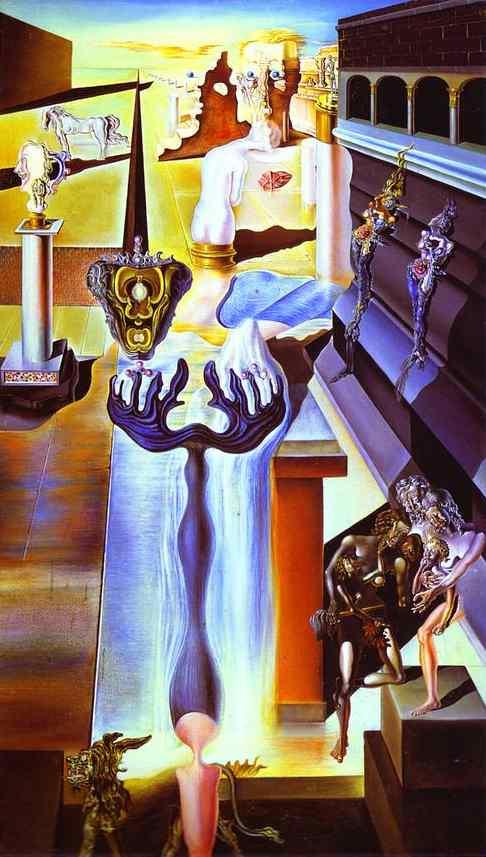
degas_ballet1.jpg “The Rehearsal” by Edgar Degas 1879 from www.bc.edu

Stopping the senators from playing the tapes

Is like…

(wait, I haven’t thought of an alliteration yet)

The Senate by a majority vote, in order to understand the testimonies, will play the Hello Garci tapes or parts of it.

Admin senators who do not want them to play the tapes can go to the Supreme Court on a petition for certiorari and prohibition. In order to succeed in getting a TRO, petitioners will have to show that: 1)they will suffer an irreparable injury; or 2) they have a clear, legal right that’s being violated; or 3) something is unconstitutional (no law is being challenged so I’m using the word “something”).

What is the irreparable injury to the petitioners, or the clear legal right that’s being violated? They do not want the tapes played because it is a “violation of RA 4200”. What is the injury to the petitioners? They might be held “criminally liable”. Then, walk away. There’s a remedy. (an injunction on a petition for certiorari is an extraordinary remedy available only when there is no other recourse in the ordinary course of the law etc. ). Walk away from the scene. Put one foot in front of the other. It’s real easy. “Criminal liability”, if any, is personal.

But we don’t want the Senate to be “criminally liable”. Only living natural persons can be punished for crimes; the “criminal liability”, if any, cannot apply to a non-natural person.

Only those individuals who stand to suffer a grave and irreparable injury, can invoke the ground of grave and irreparable injury. And these are the individuals whose phones were tapped or whose conversations were recorded: the woman who sounded like Gloria; and Garci; and other public officials/ figures.

What about: the resolution is unconstitutional because it violates the right to privacy in the Bill of Rights? The Supreme Court has ruled in many cases that only the person whose right to privacy is being violated, can invoke it.

So, a TRO against the Senate to stop it from playing the tapes on a certiorari petition filed by admin senators, may be difficult to wangle. They can file criminal complaints later but criminal complaints do not work as an injunction. There will be a preliminary investigation, a resolution, then if there’s a prima facie case, an indictment.

I’ll tell you what…Maybe you can theorize… that while they’re playing the tapes… they are in the process of….committing a crime….(you said it was a violation of RA 4200)…and they can be warrantlessly arrested…on the spot…it’s in the Rules of Court…and you get to stop the tapes from being played…on the spot…the only person able to do so….Don’t tell anyone that came from me!

But can you imagine the spectacle of that? Senate President Manny Villar being hauled off by the police or NBI, and the senators each being handcuffed or taken away or Mirandized. Unthinkable. Not politically advisable.

I just like twirling the procedure, the Rules of Court, turning them on their head. That is the effect, this morning, we had our flowing yoga poses for one hour and I kept tipping. Tipping. Tipping. And it made me laugh. And I lost my concentration. I think I almost made my yoga teacher laugh.

I’m really glad we don’t have to do this on a cliff.

(stopping the senators

from playing the tapes

is like stopping my

li’l tree-pose from tipping.)

Beheading

One of the suspects in the beheading offered to be a state witness

twofurious.jpg

(“Disparate Furioso” (“Furious Folly”) by Francisco de Goya from www.artregister.com)

contending that he did not decapitate anyone, he just fired his gun. The ARMM police chief superintendent said that if the suspect was on the arrest warrant he could not be a state witness.

Can he be a state witness? It depends on the testimony he is offering. Like… is he telling the truth. Duh. How do you know? Since I don’t have mental telepathy, it’s probably useful to find out: 1.who he is. 2. where did he come from? 3.he claimed to have been a military asset. What was his mission? You need to verify; if not true, if he is lying, what would make you think he is not lying now. 4.some assets have been known to go to the other side and reach a point of no return when they participate directly in the crimes; so you need to see his files; 5.and his file on the contract assassination of which he was accused; 6. on the beheading: if the details of his testimony can be independently corroborated, i.e., there are other pieces of evidence other than his word, that buttresses what he says. For example, the hours, the particular area, the weapons used, the cuts, the wounds inflicted; sights and sounds; names, etc. If the testimony is general, forget it. The witness needs to supply details that only a person who was present while the crime was on-going or being planned, could supply. Otherwise, forget it.

In any case, the Rules of Court set forth the following requirements of when an accused may be discharged as state witness: 1.the prosecution absolutely needs the testimony of the accused and does not have any other evidence or even enough evidence to establish guilt beyond all reasonable doubt; 2.the testimony can be verified or corroborated in its material points; 3.he is not the most guilty (note that the rule does not say he/ she should be the least guilty; it just says “not the most guilty”). In other words, he/ she should not be the mastermind (I’d probably prefer too that the state witness was not a principal by inducement or the person who forced or induced his/her co-accused to commit the crime). 3.he/ she has not been convicted of any crime involving moral turpitude; examples are estafa, qualified theft, falsification, etc.

Here’s the verbatim rule on the matter:

“RULE 119. Sec. 17. Discharge of accused to be state witness. – When two or more persons are jointly charged with the commission of any offense, upon motion of the prosecution before resting its case, the court may direct one or more of the accused to be discharged with their consent so that they may be witnesses for the state when, after requiring the prosecution to present evidence and the sworn statement of each proposed state witness at a hearing in support of the discharge, the court is satisfied that:

(a) There is absolute necessity for the testimony of the accused whose discharge is requested;

(b) There is no other direct evidence available for the proper prosecution of the offense committed, except the testimony of said accused;

(c) The testimony of said accused can be substantially corroborated in its material points;

(d) Said accused does not appear to be the most guilty; and

(e) Said accused has not at any time been convicted of any offense involving moral turpitude.

Evidence adduced in support of the discharge shall automatically form part of the trial. If the court denies the motion for discharge of the accused as state witness, his sworn statement shall be inadmissible in evidence.

“ Sec. 18. Discharge of accused operates as acquittal. – The order indicated in the preceding section shall amount to an acquittal of the discharged accused and shall be a bar to future prosecution for the same offense, unless the accused fails or refuses to testify against his co-accused in accordance with his sworn statement constituting the basis for his discharge.”

the face

conf1.gif Photo right-clicked from www.supremecourt.gov.ph In an interview with ANC’s Mariton Pacheco a few minutes before the Supreme Court called for recess at today’s oral arguments (right after Justices Corona and Morales asked Attorneys Sixto Brillantes and Koko Pimentel to take to the podium to explain why they supposedly threatened the Supreme Court with street protests in interviews with ANC), pañero Atty. Brillantes in the noon interview said he never gave an interview to ANC after the canvassing had started and that he would never give such an interview.

I seem to recall that a day before Atty. Koko Pimentel gave his oral arguments, I saw pañero Atty. Brillantes’s face on tv, and he said that Koko was a brilliant lawyer, but he was worried that he might get emotional because it involved him personally and he should have let another lawyer handle the oral arguments, and when asked what might happen if the Supreme Court did not abate the “fraudulence”, he paused, then had this grim face, shook his head very slightly, and said almost softly, “huwag naman sana…ewan ko, huwag naman sana mangyari yan…” (“i hope not… i hope it doesn’t happen…) then he said something like “baka may masamang mangyayari…” (“something untoward might happen”) or something to that effect (I’m not sure about the last quote.)

I could’ve sworn I saw such a footage. Or maybe I’m imagining things. But usually when I imagine, it involves large landscapes and breathtaking cinematography and vast, aerial shots. But here, it was a tight shot. Of Atty. Brillante’s face, his mood switched when he answered the last question, he wore a brooding expression, like the FPJ-look when FPJ spoke softly and warned of dire consequences. But how can you cite a lawyer for indirect contempt for that? How would the citation read?

“For wearing a dark, melancholic face, that forebode of sinister tidings (the expression of the face, that is,) in the foreseeable future, you are hereby cited in indirect contempt, for impeding, degrading, and obstructing the orderly administration of justice, contrary to law, and are hereby ordered to pay a fine of P20,000. So ordered. And stop wearing that gloomy face! So ordered.”

brood.jpg[photo of a print, one of Van Gogh’s earliest works, “Peasant’s Head (Study for the Potato-eaters)”, 1885, The Essential Van Gogh by Cutts and Smith, Parragon 2002] What if the guy was just sad? thinking of what might happen? Or maybe he missed his lunch so he looked desolate. I look despondent when I’m hungry. Would that constitute a veiled threat?

Several years ago, pañero Leonard de Vera was cited by the same Court for indirect contempt for saying in an interview something like, “if the plunder law is declared unconstitutional, there will be massive street protests!” (I don’t know if he said “will” or “would”. “Would” would have sounded hypothetical), and ordered to pay a fine of P20,000. He filed an MR but I don’t know if he was able to lift the citation.

A couple of years ago, former Finance Secretary Cesar Purisima was cited for indirect contempt by the same Court; in an ambush interview, this was how it went, as I recall: “Reporter: And is it true that the President called up the justices to ask them to TRO the VAT?” and he said something like, “Naku, mahirap na, I might get into trouble if I answered that question…” Well, he didn’t really answer the question, but still got into trouble, (in some newspaper interviews, I think he also said something like, “the President told me that she was trying to find some legal way of having the VAT law suspended” etc.); and was asked to pay a fine of P20,000.oo.

sc-logo.pngPhoto right-clicked from www.supremecourt.gov.ph

I can’t say I agree with those decisions.

A few years ago,in an ANC interview I said something like: the order of the Sandiganbayan (allowing the accused in the plunder case to go abroad) was irregular (by that, I meant, i didn’t think it was in accord with the rules of court). I attended the hearing to find out if the ruling would go through (I have this standing notion that without make-up and with hair disheveled, I am invisible), I sat at the back, second to the last row, a channel 9 reporter sat beside me and talked about his surgery, so much for being invisible, and before I knew it, Atty. Flaminiano stood up and was repeating what was said on tv and said something like contempt then looked at our direction from across the room, then Justice Minita said, “where is she?”; I stood up, said good morning, said my name, said i wasn’t in court attire and politely said if they wished, i could go in front and argue; Justice Minita sort of waved her hand away, and said that they were ruling based on their best lights, and the rules of court, and the interest of justice, etc. etc.

A friend of mine was once arguing very loudly with opposing counsel (in an RTC in QC) and she sort of pushed the thick book Rules of Court that was on the table, she shoved it in the direction of pañero opposing counsel and said “why don’t you look it up in the rules of court, it’s all there, don’t you even read!!!” and the female judge said “Police! Police!” (I’m not kidding, this really happened), then a barong-clad male person came in and my lawyer-friend thought she would be dragged to city jail and the male person went up to the judge, he had a stethoscope and blood pressure gauge, and he took the judge’s blood pressure; then when the judge simmered down, she pointed at the clerk of court and said, “you, you take her to the staff room until she cools down”; and that was when I got the call from my friend she told me she had been detained and I said alright I’ll be there in ten minutes for your bail and said no, and she was laughing and said she wasn’t really detained, she was in the staff room of the court personnel, she was telling her story to everyone. After all, it wasn’t her blood pressure that shot up.