J, age 14, performs as part of the prestigious University of Southern California (USC) Thornton School of Music Los Angeles Youth Jazz Ensemble (LAYJE) after topping nationwide U.S. audition search (top 3)

tap the “play arrow” (if on mobile device, click “Listen in browser”) on the soundcloud pod below to stream… :

CODE


J, age 14, performs as part of the prestigious University of Southern California (USC) Thornton School of Music Los Angeles Youth Jazz Ensemble ( LAYJE) after topping the nationwide U.S. audition search (top 3): Concert in two hours Los Angeles time: 7pm Sunday December 9, Newman Recital Hall. 

       Background: Last September, applicants nationwide were given a new 10-minute required audition piece to perform with improvs, followed by sight reading of notes, scales of blues and interview. Myra received the audition piece for him only one week before the day of audition.               

             Upon hearing him perform on alto sax after hearing hundreds of others,  the music director pointed at him and said, “dude, you’re the man!” 

               ♥ ♥ ♥

          ” … Founded in 1884, and today the oldest continually operating cultural institution in Los Angeles, the Thornton School consistently ranks among the top one percent of the nation’s music schools and conservatories. Graduates of the school attain positions with major orchestras, ensembles, recording studios and music industry firms and perform on stages and in studios around the world.

        “Blending the rigors of a traditional conservatory-style education with the benefits of studying at a leading research university, the Thornton School offers students a thorough music education in a real-world context. Located at the center of Los Angeles, the school is the collegiate partner of choice for the Los Angeles Philharmonic, Los Angeles Opera, Los Angeles Chamber Orchestra, the GRAMMY Foundation and The Recording Academy, to name a few.

        “In addition to their work with these ensembles, Thornton students are a constant presence in local classrooms, reaching out to the next generation of musicians through music education and appreciation courses. With its faculty, students, events and work, the Thornton School is one of the most important cultural resources in Los Angeles.”

(quoted paragraphs and image from the University of Southern California Thornton School of Music website, with graphics on J’s performance embedded by blog admin)


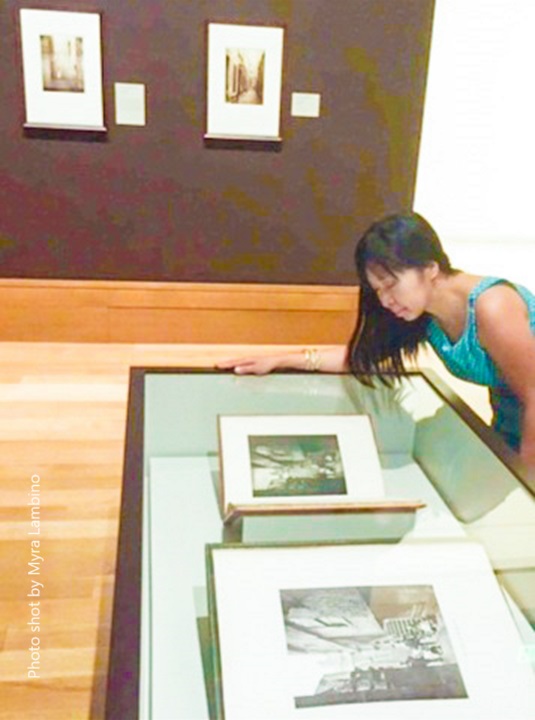
9 hours ago: LA Central Public Library, interiors, by Myra Lambino

tap the “play arrow” to stream… The Beatles! (if on mobile, click “Listen in browser”)

CODE


9 hours ago. i-Phone-shot by Myra Lambino : interiors, LA Central Public Library …

Paperback Writer by The Beatles …

About the song and the composers ( pasted from songfacts) (in blue font below) (an anthology of news magazine features, not footnoted)  :

from songfacts.com: “Paul McCartney wrote this after helping some friends, including John Dunbar, set up the Indica Bookshop (in the basement was the Indica Gallery, where John Lennon eventually met Yoko Ono), in January of 1966. Paul was the first customer of the shop.

        “This song was a sort of an homage to lots of authors, including John Lennon, who had already written two books: In His Own Write and A Spaniard In The Works. He also was thinking of the author Martin Amis, whom he had just developed a passion for. 

     “The song is sung from the perspective of an author soliciting a publisher. A “paperback” is cheaper than a traditional hardcover book, and at the time was considered of lower quality and written for mass consumption. The implication is that the writer isn’t all that good.

     “The first #1 hit for The Beatles that was not about love.
     “John Lennon and George Harrison sang the French nursery rhyme “Frére Jacques” in the background. The Frére Jacques part has nothing to do with John Lennon – Paul just thought it was clever – but it does translate to “Brother John.”
       “The B-side to this single was John Lennon’s “Rain.” Paul and John would always compete for the A-side of The Beatles singles. 

       “Lennon claimed this was “the brother of Day Tripper,” meaning the song was based on a “dirty” sounding guitar lick. The Beatles released “Day Tripper” the previous year. >>
McCartney’s bass was boosted by using a loudspeaker as its microphone and positioning it in front of the bass speaker. There was some concern that the heavy bass line would make record players skip.

     “The ad for the single in England used the “butcher cover,” showing The Beatles holding parts of bloody dolls. It caused a stir in America when it was used for the Yesterday and Today album, which Columbia Records pulled from stores soon after release and is now a collector’s item. If you own an early copy of Yesterday… And Today with the non-controversial cover, you might have something valuable with a little trick: according to Bill Cody, who worked at the Harmony Record Shop in Colorado, the new covers were put over the originals, and it is possible to steam them off to reveal the butcher covers. At Harmony Records, this is what they did with their shipment, allowing them to sell the albums for $5.99 instead of the original $2.99.

      “This was a song that led the transition from early Beatles style to later Beatles style, from love songs to opening up the subject of songs to a wider variety of subjects. Paul’s Aunt had been bugging him for months, challenging him to “Write a song that wasn’t about love.” So he wrote this just to shut her up. He said: “We always try to do something different. And this idea’s a bit different. Years ago my Auntie Lil said to me, ‘Why can’t you ever write about a horse or the summit conference or something interesting? So I thought, ‘All right, Auntie Lil. I’ll show you.” 
     “Ringo’s bass drum was emphasized on this track. A microphone was placed an inch away to make it boom. 

       “On the Beatles’ lone appearance on BBC’s long-running music show Top Of The Pops, they performed this song with George Harrison mysteriously miming to “Frére Jacques.”
      “The single’s picture sleeve showed both Lennon and Harrison playing left-handed as Capitol’s art department mistakenly reversed their photos.
       “This claimed the top spot in the US for two non-consecutive weeks; it was interrupted for one week by Frank Sinatra’s “Strangers in the Night.”
       “By this time, The Beatles were about to cease touring and couldn’t make many TV appearances to perform the song. This made it very difficult to promote the single, so they commissioned a film clip that could be shown on these programs in their stead, unwittingly creating one of the first music videos.

       “The video was shot at Chiswick House in London, which is famous for its lavish gardens. The setting made an interesting backdrop, but the focus was on the band, with the guys getting lots of close-ups and appearing in various cool poses. A video for the flip side of the single, “Rain,” was shot at the same time.

     “The clip first aired in the US, appearing on The Ed Sullivan Show on June 5, 1966. Black-and-white versions later aired in the UK on Thank Your Lucky Stars and Ready, Steady, Go!
The video was directed by Michael Lindsay-Hogg, who worked on various UK television shows, including Ready, Steady,Go!, where he fell in with The Beatles and The Rolling Stones. He became arguably the first music video director when these bands hired him to make promotional films; after doing “Paperback Writer,” he also did “Hey Jude” and “Revolution,” as well as several productions for The Stones, including their Rock and Roll Circus special.

       “As revealed in the Beatles 1+ reissue, Lindsay-Hogg pitched a conceptual video for “Paperback Writer” envisioning Paul McCartney as an aspiring novelist. The band’s manager, Brian Epstein, killed the idea, becoming perhaps the first band manager to quash a clever concept video in favor of just showing the band performing the song in an exotic location.”