Summary of answers to interview questions on the Shield Law and the congressional investigation of SMNI
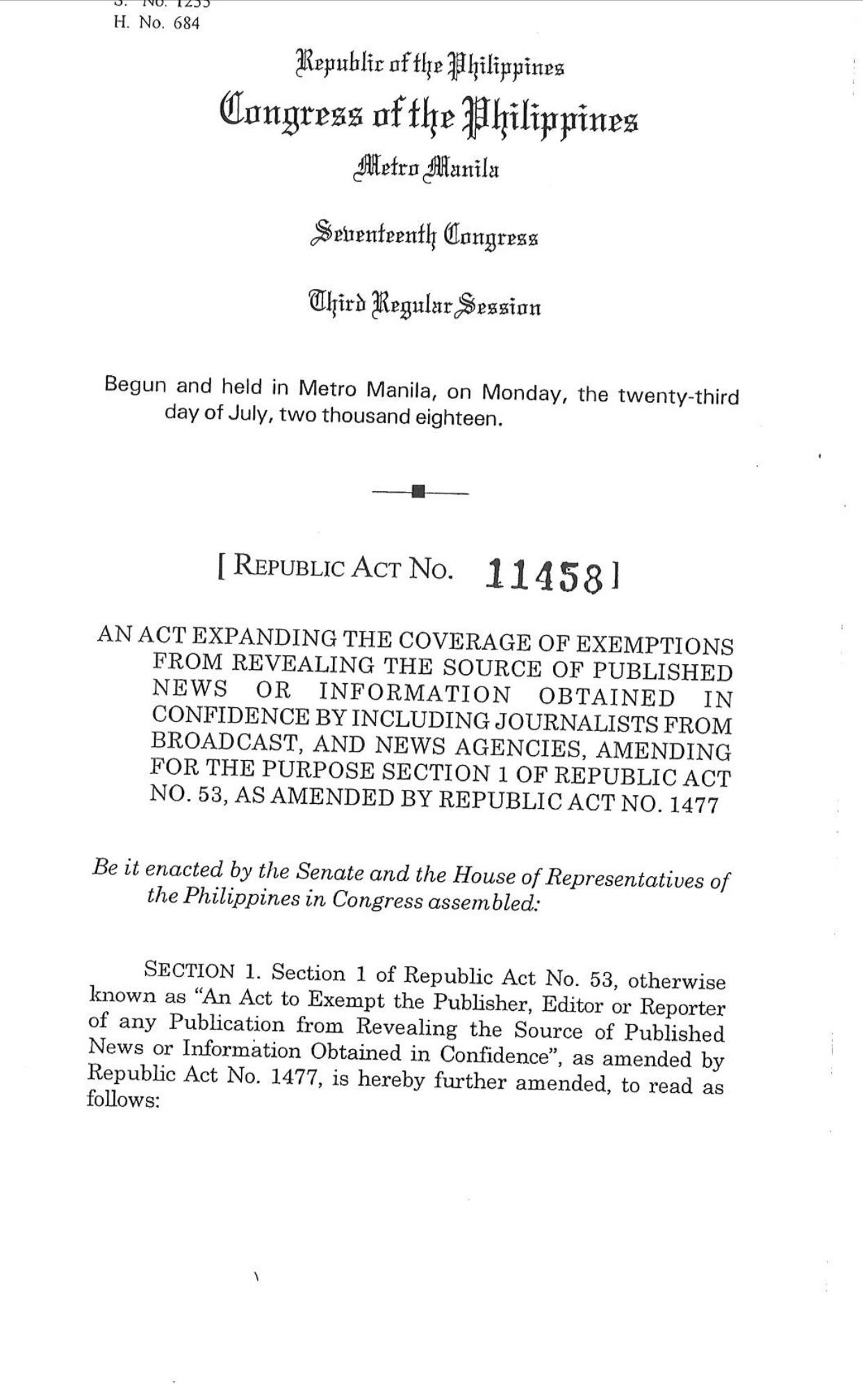
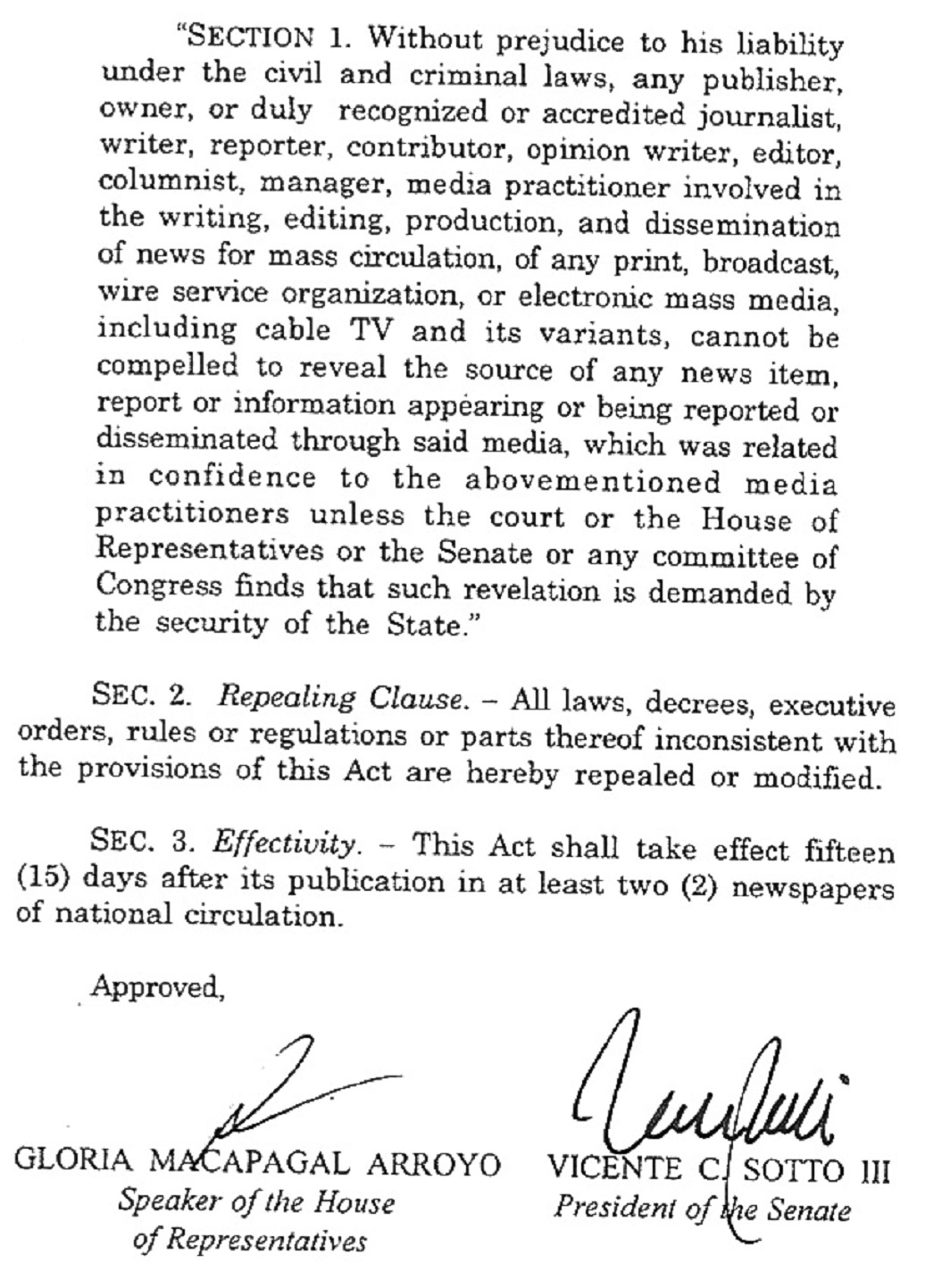
6 Dec. 2023, ABS-CBN interview on the Shield Law, from blog admin: “The better procedure (in citing for contempt) is not on the ground of not agreeing to disclose the source of information because we have a Shield Law but on the ground of disrespectful conduct (for behavior) … the Shield Law however provides in its first paragraph that it is without prejudice to any civil and criminal liability …” In other words: The first line in the Shield Law states that it is without prejudice to civil and criminal liability… This means that if the entire “report” is based on an anonymous or unnamed source throughout, and it is defamatory (e.g., it alleges wrongdoing based on an unnamed source, or a second-hand source such as a piece of paper written by someone with unnamed informants), the media practitioner can still be hauled to court or a congressional committee. In the University, we teach students to have two or more independent, first-hand sources — for investigative reports on corruption and other wrongdoing, we require multiple, independent first-hand sources some of whom, if push comes to shove, can be named and identified. The personalities involved here should have been cited for disrespectful conduct instead, and not for refusing to reveal their source because we wouldn’t want authentic journalists to be forced to disclose their confidential source.